
If you have ever landed on a live price page and thought, “Okay, the chart looks nice, but what do I actually do with this?”, you are not alone. The same thing happens when people search for fintechzoom.com silver: they get the price, a few lines of commentary, and then they are mostly left to figure out the rest on their own.
This guide is designed to slow things down a little. It walks through what those silver pages on FintechZoom actually show, how silver works as an asset, how you might use real-time data in a sensible way, and where the limits are so you do not rely on one screen for every decision. Along the way, it connects silver to the broader fintech world, because the way we track and trade metals today is very different from a decade ago.
What fintechzoom.com silver actually is
When people talk about “fintechzoom.com silver”, they are usually referring to a set of pages on FintechZoom that display live silver prices, historical charts, and short-form analysis. These pages focus on the silver spot price in major currencies, add basic context around daily moves, and sometimes highlight recent trends or news.
The idea is simple: give you a quick snapshot of the silver market without forcing you to dig through an institutional terminal. You will typically see the current price, the percentage move on the day, a chart with different timeframes, and some commentary on what might be driving the latest move. It is fast and convenient, which is probably why these pages rank well and are shared so often.
fintechzoom.com silver price explained
How live silver prices work on FintechZoom
Silver price pages on FintechZoom pull in real-time or near real-time market data from external feeds that track trading activity on major exchanges. What you see as “spot price” is essentially the going rate for immediate settlement of silver, expressed per troy ounce in currencies like USD or EUR. Small lags can exist, but for most retail users, the price is close enough to what brokers and dealers are quoting.
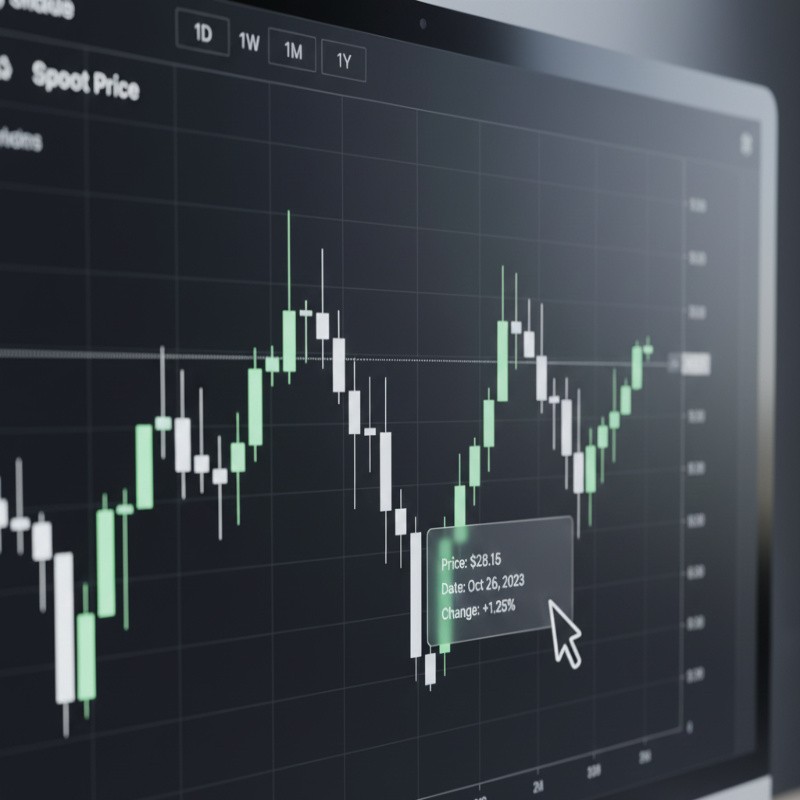
The chart typically lets you toggle between intraday, daily, weekly, and longer-term views. In practice, that means you can shift from watching minute-by-minute candles to zooming out and seeing how silver behaved over months or years. That simple control already changes how you think: one timeframe pushes you toward emotional decisions, while another nudges you to see cycles and context.
Spot price vs futures vs ETFs
It is worth pausing on a basic distinction that often gets glossed over. The silver spot price on fintechzoom.com silver pages refers to immediate settlement, but actual trading can happen through futures contracts, exchange-traded funds (ETFs), mining stocks, or physical bullion. Each of these channels tracks spot in its own way, with different costs, risks, and liquidity profiles.
Futures prices reflect expectations about silver at a specific date, so they can trade at a premium or discount to spot. ETFs usually hold physical silver or futures and trade like stocks, with their share prices closely following an underlying silver benchmark. Miners are even more indirect: their share prices depend not only on silver prices but also on production costs, management, and broader stock market sentiment. Understanding that the number you see on FintechZoom is a reference point, not the whole story, already puts you ahead of many casual viewers.
Why silver feels more volatile than gold
Many investors notice that silver seems to swing harder than gold for the same macro headlines. Part of this comes down to market size: silver is a smaller market, so a given amount of money moving in or out creates a larger percentage change. That makes the silver chart on FintechZoom look more dramatic, especially on shorter timeframes.
Silver is also pulled between two roles: industrial metal and store of value. Gold is primarily a monetary and investment asset, while silver has significant use in electronics, solar panels, and other industrial applications. So, when economic expectations and industrial demand change, silver can react more sharply, amplifying the moves you see on price-tracking platforms.
Factors that move silver prices on fintechzoom.com
Industrial demand: EVs, solar, and electronics
A big part of silver’s story today comes from technology and energy. Silver is used in photovoltaic cells for solar panels, in certain electrical connections, and in various industrial processes where its conductivity and other properties really matter. Demand from these sectors can push prices higher when new capacity is built or government policies favor renewables and electrification.
Of course, industrial demand can also soften if growth slows or if manufacturers shift to thriftier designs. The point is that when you see price swings on the fintechzoom.com silver chart, there is often a mix of macroeconomic news and very practical demand stories from factories and energy projects behind those moves. It is not always easy to separate the two, and that uncertainty is part of why silver behaves the way it does.
Inflation, interest rates, and the US dollar
Silver is often grouped with gold as a potential hedge against inflation and currency debasement. When inflation expectations rise, or when central banks keep real interest rates low, investors sometimes shift toward assets that cannot be printed, including precious metals. Those flows show up in the live price and can cause silver to climb even if industrial demand is not changing that much.
The US dollar plays a constant background role. Because silver is usually quoted in dollars, a stronger USD can push the dollar price of silver down, even if its value in other currencies feels more stable. Likewise, a weaker dollar can make silver appear to jump when part of that move is really about the currency denominator. When watching silver on FintechZoom, it helps to keep an eye on dollar trends and interest-rate expectations, not just the metal itself.
Market sentiment, speculation, and news shocks
Not everything is fundamental. News headlines, online discussion, and speculative flows can drive short-term bursts in silver prices. Some days, the explanation in the commentary box under the chart may feel a bit thin because markets are reacting to a combination of narratives rather than a single clear event. That is normal, even if it is slightly frustrating when you are trying to find a tidy cause.
This is where real-time price trackers can be double-edged. The same instant access that helps you stay informed also makes it very easy to react emotionally to every spike or dip. Watching the fintechzoom.com silver price tick by tick can be useful when you have a plan, but unsettling if you are still figuring out your strategy. Being honest with yourself about how you respond to volatility is part of using these tools responsibly.
Using fintechzoom.com silver tools step by step
Reading the live chart and key data points
On a typical FintechZoom silver page, the first thing you will see is the current price, the daily percentage change, and a chart. It sounds obvious, but it helps to spend a moment on each piece instead of rushing straight to the last candle. The absolute price tells you where silver is, the percentage move tells you how unusual today is, and the chart tells you whether the latest move is part of a bigger pattern.
Most users instinctively stick with the default timeframe, often one day or one week. It is usually worth flipping through a few options: zoom into intraday data to understand what happened after a major announcement, then zoom out to six months or a year to see how meaningful that move really is. If you later read a more specific guide on how to use fintechzoom.com silver for real-time price tracking, you can go even deeper into the mechanics of timeframes, chart types, and small details on the interface.
Timeframes, indicators, and simple setups
Many price pages allow you to add basic technical indicators like moving averages or oscillators. Even if FintechZoom keeps things relatively simple, using a single moving average can already smooth out noise and help you see whether silver is broadly trending up, drifting sideways, or slipping lower. Shorter averages react quickly but can whipsaw, while longer ones are calmer and slower.
You do not need a complicated setup to benefit from the tools. For example, some investors simply look at whether the current price is above or below a chosen average when deciding to add or trim a position. Others might glance at a momentum indicator to avoid buying just after a sharp spike. If you later feel ready for structured methods, a deeper piece on silver price FintechZoom strategies can walk through specific examples and risk checks.
Combining FintechZoom with other sources
No single site has a monopoly on truth, and that includes fintechzoom.com silver pages. Professional investors routinely cross-check prices and data across multiple sources: exchange feeds, broker platforms, specialist metals sites, and sometimes even physical dealer quotes. Using FintechZoom as your starting window into the market is fine, but it works best as part of a broader information toolkit.
In practice, that might mean checking FintechZoom for a quick view, then confirming key levels or spreads on your brokerage platform before placing any order. If you are using silver as part of a long-term portfolio, you might also read periodic research or macro commentary to avoid overreacting to daily noise. Over time, you will probably develop a comfortable rhythm: a small handful of reliable sites, each doing one job well.
Silver investing strategies beyond the price screen
Physical silver: coins, bars, and reality
Watching the live silver price on FintechZoom is one thing; owning actual metal is another. Physical silver often comes in the form of coins and bars, with premiums over spot that reflect minting, distribution, and dealer margins. Storage, insurance, and liquidity also matter: selling a bar is not as instant as clicking a button on a trading app, especially in stressed markets.
Some people like the tangible feeling of holding metal, especially if they see it as long-term insurance rather than a trading instrument. Others find the logistics burdensome and prefer financial instruments instead. Either way, the number you see for silver on fintechzoom.com is a reference; the all-in cost of buying or selling physical silver will sit somewhere around that number, depending on spreads and fees.
Silver ETFs and mining stocks
For many investors, ETFs are the most practical way to gain silver exposure. These funds usually hold physical silver or futures contracts and trade on stock exchanges, making them easy to buy and sell through a regular brokerage account. Their prices closely track silver benchmarks, with management fees and small tracking differences accumulated over time.
Mining stocks sit one step further away from the metal itself. A silver miner’s share price is influenced by silver prices, but also by operational performance, geopolitical risk in mining regions, balance-sheet decisions, and general equity market sentiment. For some investors, miners offer leveraged exposure to silver, but that leverage cuts both ways during downturns. Understanding that distinction helps you interpret the price moves you see on FintechZoom in light of what you actually hold.
Short-term trading vs long-term allocation
It can be tempting to treat every wiggle on the fintechzoom.com silver chart as a trading opportunity. Short-term trading strategies use intraday and daily moves to try to capture small price differences, often with tight risk controls and frequent monitoring. This approach is demanding and can become stressful, particularly if you are juggling it alongside a full-time job or other responsibilities.
Long-term allocation is quieter. Some investors simply decide that silver should be, say, 5–10 percent of their portfolio and adjust a few times a year, using real-time price data mainly to avoid extremely unfavorable timing. This does not guarantee results, of course, but it shifts the focus from reacting to every tick to maintaining a steady plan. If you feel drawn to more structured methods, a detailed look at silver price FintechZoom strategies can help you think through entries, exits, and position sizing more methodically.

Risks and limitations of relying on fintechzoom.com silver alone
Data latency and overconfidence in a single source
Even when a site aims for real-time updates, there can be small delays, technical issues, or occasional discrepancies with other feeds. For everyday decisions, those differences might not matter much, but it is worth remembering that what you see on fintechzoom.com silver is still a representation of the market, not the market itself. Professional traders usually compare multiple data sources for exactly this reason.
Overconfidence tends to creep in when one site becomes the default “truth” in your mind. If you never compare quotes, spreads, or depth of market elsewhere, you can miss important information, especially during volatile periods when liquidity thins out. A simple habit of cross-checking key levels with your broker or another price tracker can go a long way toward keeping you grounded.
Real-time updates and emotional decision-making
Real-time data can be oddly intoxicating. It feels good to know exactly what silver is doing from moment to moment, but that same stream of updates can make it hard to sit still. Many people discover that their worst decisions happen after they have stared at a chart for too long, especially if they do not have a clear plan in mind. Silver’s tendency to move in sharp bursts does not help.
One way to manage this is to deliberately limit how often you check the price, depending on your strategy. A long-term allocator probably does not need to watch the one-minute chart, while an active trader might consciously set times to review positions rather than reacting instantly to every twitch. It is a small mental adjustment, but it can make the difference between using fintechzoom.com silver as a tool and letting it drive your mood.
Diversification and risk management still matter
However appealing silver might look on a good day, it is still a single asset with its own cycles, drawdowns, and surprises. A portfolio heavily concentrated in one metal is exposed to very specific risks, from changes in industrial demand to shifts in investor sentiment. FintechZoom’s broader commodities sections and other analysis pieces frequently emphasize diversification for exactly this reason.
In practice, diversification can mean pairing silver with other assets such as equities, bonds, cash, or even other commodities. Real-time data helps you see how each part behaves, but the decision about how much to allocate to each segment is ultimately a personal and strategic one. No price page, however polished, can make that call for you.
Fintech, silver, and the future of commodity tracking
From static tables to real-time analytics
A couple of decades ago, getting reliable silver price information often meant calling a dealer, checking a newspaper, or using specialized terminals with steep learning curves. Today, platforms like FintechZoom bring live commodity data, charts, and headlines into a single browser tab or mobile screen. The barrier to entry is dramatically lower, and that has changed who participates in these markets.
That said, the evolution is still in progress. Some sites now layer on analytics, sentiment gauges, and educational content that go beyond raw price. Others experiment with custom alerts, portfolio tracking, and even algorithmic screening tools. Silver, like other commodities, is becoming part of a much broader fintech experience, where data, news, and tools are connected rather than isolated.
Where FintechZoom fits among other platforms
FintechZoom tends to position itself as a wide-coverage financial news and data outlet, rather than a narrow specialist in metals. You will see silver listed alongside indices, stocks, crypto, and other commodities, with consistent layouts and similar styles of commentary. Competing platforms and partners, such as FastBull and other commodity-focused sites, often drill deeper into specific markets while relying on a similar real-time data backbone.
For a typical investor, that means FintechZoom can serve as a convenient dashboard, while more specialized sources handle the heavier analysis. If you later want to think more concretely about how fintechzoom.com silver compares with other tools, a focused piece on fintechzoom.com silver vs other platforms can help you weigh strengths and trade-offs in more detail.
Possible next steps: AI, APIs, and personalization
Looking ahead, it is reasonable to expect that silver tracking will become more personalized. Some platforms already use APIs to feed live prices into custom dashboards, and AI-powered tools are beginning to summarize market moves, highlight anomalies, or suggest areas that might warrant a closer look. Silver, with its mix of industrial and monetary drivers, is a natural candidate for this kind of guided analysis.
Of course, technology is not a magic shield against risk or uncertainty. Better tools can make it easier to understand what is happening, but they cannot guarantee outcomes or remove volatility. The most realistic scenario is a partnership: platforms like FintechZoom supply data and context; you bring your goals, time horizon, and self-awareness. The combination is what ultimately shapes your experience with the market.
FAQs about fintechzoom.com silver
Is FintechZoom accurate for silver prices?
For most retail use cases, FintechZoom’s silver prices are sufficiently accurate and timely, especially when you are monitoring trends rather than executing high-frequency trades. The site draws on established market data sources and updates frequently, though the exact refresh rate and latency can vary. For critical execution decisions, it is still sensible to cross-check with your broker or a primary exchange feed.
Can you trade silver directly on FintechZoom?
FintechZoom functions primarily as a data and news platform, not as a trading venue. It helps you observe silver prices, read commentary, and follow related markets, but actual buying and selling typically happens through brokers, exchanges, or dealers that support silver products. Think of fintechzoom.com silver as the observation deck, not the trading floor.
How often is the silver price updated?
Update frequency depends on the underlying data feeds and the specific page, but silver prices on FintechZoom are generally refreshed in real-time or close to it. In fast-moving markets, you might notice small lags compared with broker platforms, which is one reason why experienced traders treat any public page as indicative rather than definitive. For monitoring, it is usually more than adequate.
Why does silver sometimes move differently from my silver ETF or mining stock?
The fintechzoom.com silver chart tracks the underlying metal, while your ETF or stock price reflects additional factors. ETFs can diverge temporarily due to spreads, flows, and tracking differences, and miners have company-specific risks on top of exposure to the silver price. It can be a bit jarring at first, but over longer periods, these relationships tend to make more sense.
Is silver still worth considering in a modern portfolio?
Silver’s role has evolved but not disappeared. It can offer diversification benefits and potential protection in certain macro environments, though it remains volatile and unpredictable. Whether it fits your portfolio depends on your risk tolerance, time horizon, and how you balance it against other assets, not just on what the live chart is doing on any given day.
Conclusion: making fintechzoom.com silver work for you
In the end, fintechzoom.com silver is a doorway, not a destination. It gives you live prices, charts, and context quickly, but the real value comes from how you interpret that information and fit it into a broader, realistic plan. The more you understand the forces behind the numbers, the less likely you are to be thrown off balance by every sharp move.
Using FintechZoom alongside other tools, being honest about your risk tolerance, and distinguishing between short-term noise and long-term trends can make silver feel less mysterious and a bit more manageable. There will always be uncertainty, and perhaps that is part of what keeps markets interesting, but with a grounded approach, fintechzoom.com silver can shift from being just another chart on your screen to a useful part of how you see the financial world.